Setting off
Last weekend I had no idea where to go, but the boss at home wanted to go out and have some fun. I looked around Beijing and it seemed there wasn't really anywhere to go. After searching for a while, I discovered that Datong was only 2 hours away by high-speed rail, which was a bit surprising, so I took the Beijing-Zhangjiakou high-speed rail for the first time.
The train starts from Qinghe Station and ends at Datong South. In fact, if you don't take one of the trains that stops at many stations, the faster ones can get there in just a little over 1 hour and 40 minutes.
The taxi driver taking us to Qinghe Station said the station had only been completed last year, and some road signs were still inaccurate. That reminded me of the last time I passed Qinghe, when Line 13 was still running on temporary tracks and the site of Qinghe Station was still a huge pit. Of course, the COVID pandemic seems to have made the clock spin faster than before. In the blink of an eye, more than two years have passed: the station is finished, and the Beijing-Zhangjiakou high-speed rail is open. This line, built for the Winter Olympics, even has little athlete figures on the guardrails. Qinghe Station is already outside the Fifth Ring Road, so the train doesn't run underground there. I wonder whether I'll get a chance next time to try taking an underground high-speed train from Beijing North.
The weather in North China was great on Friday. New train, new line—everything was very clean. Combined with the ridiculously high saturation of the scenery outside the window, it reminded me of a trip to Kansai in Japan a few years ago, when I accidentally passed my stop and saw the rural countryside scenery of Japan.
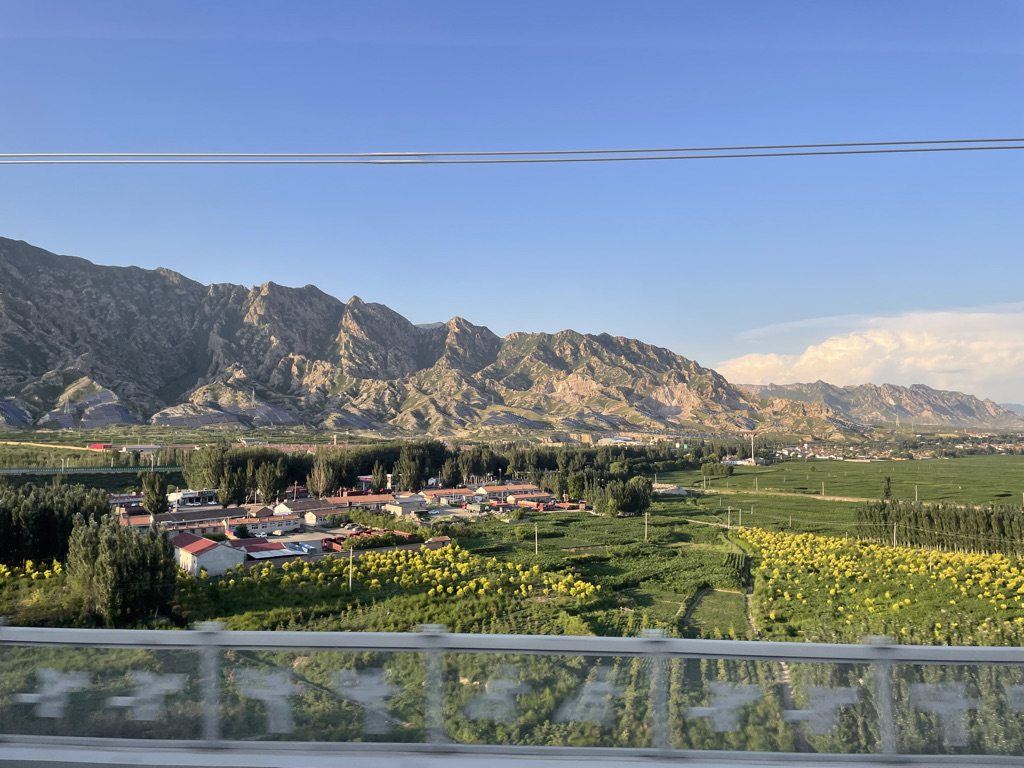
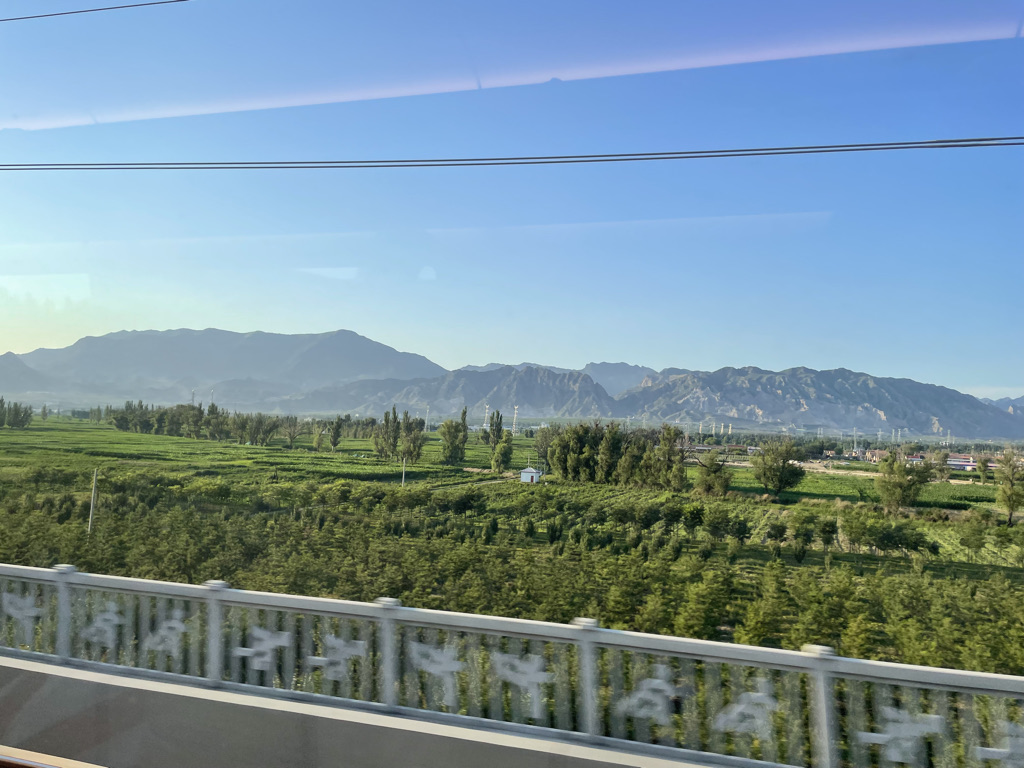
When we arrived in Datong, there was still a little evening glow in the sky. Coming out of Datong South Station, we took a taxi straight to the city center. My first impression was: this city is really new. Almost everything looked newly built.
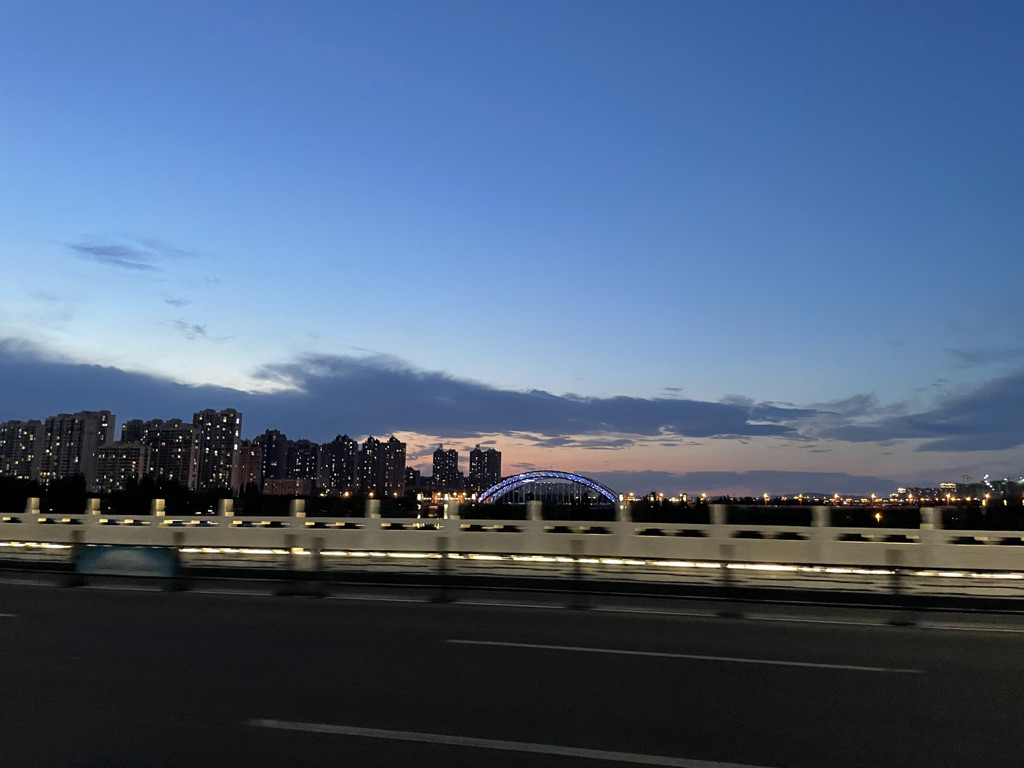
The experience afterward confirmed that impression. Many places in Datong have been demolished and rebuilt. Many one-story houses in the city center were torn down and replaced with new apartment buildings, and you could still see rubble from recently demolished buildings inside the urban area. We checked into the hotel on Friday, then went out for dinner, and were amazed by the cost of living. The boss picked a noodle shop with very refined decor. The waiters were uniformly dressed in black. When she paid, I got a bank card notification: 35 yuan. I asked, "Did you only order one bowl of noodles?" "No, two. Aren't you eating?" ... It was less than three hours away from the capital, and I was a bit unaccustomed.
Day 1
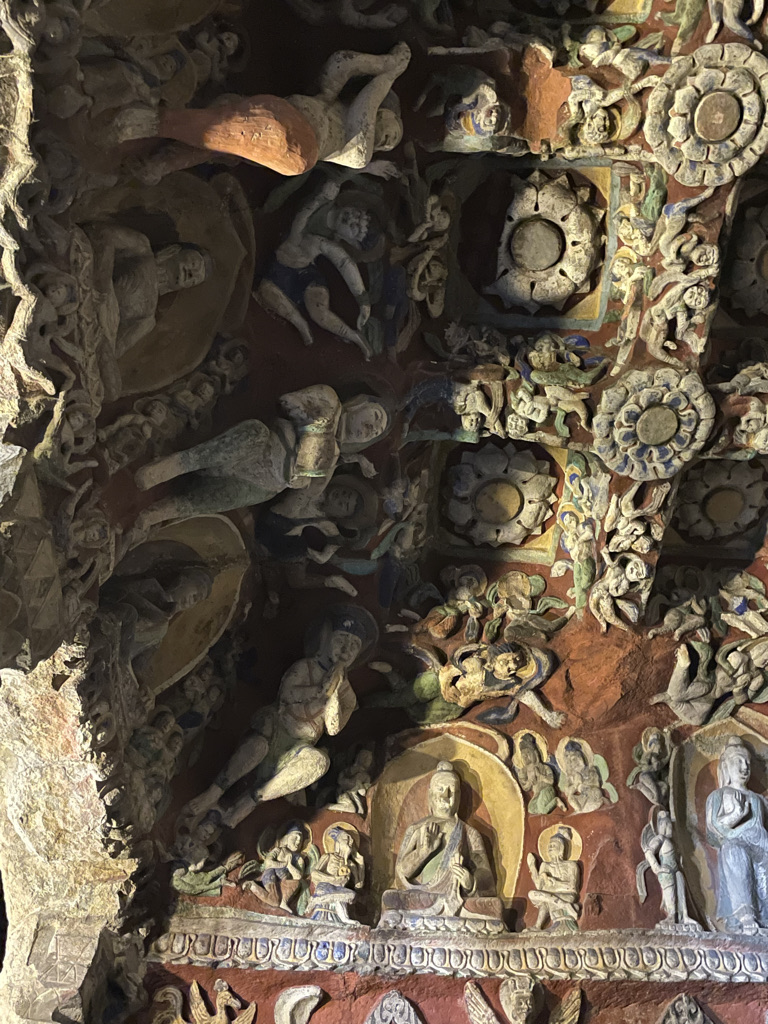
For the second day's itinerary, our first stop was the Yungang Grottoes, about 15 kilometers by taxi from the city center, costing 31 yuan. The Yungang Grottoes were first built during the reign of Emperor Xiaowen of Northern Wei, and together with the Longmen Grottoes in Luoyang and the Mogao Caves in Dunhuang, they are known as China's three great grottoes. I haven't been to the Longmen Grottoes yet, though that was also built by Emperor Xiaowen of Northern Wei (which tells you how amazing he was). Compared with the Mogao Caves, I feel its artistic value is somewhat lower, but there are still many incredible stone carving techniques. In terms of cultural relic preservation, I felt it was far from as well done as at Mogao. There has already been quite a bit of weathering, and the restoration work didn't seem especially good. It's also worth mentioning that there are similarly some rather pointless additions from the Qing dynasty. There are plenty of photos online, so I won't put too many here.
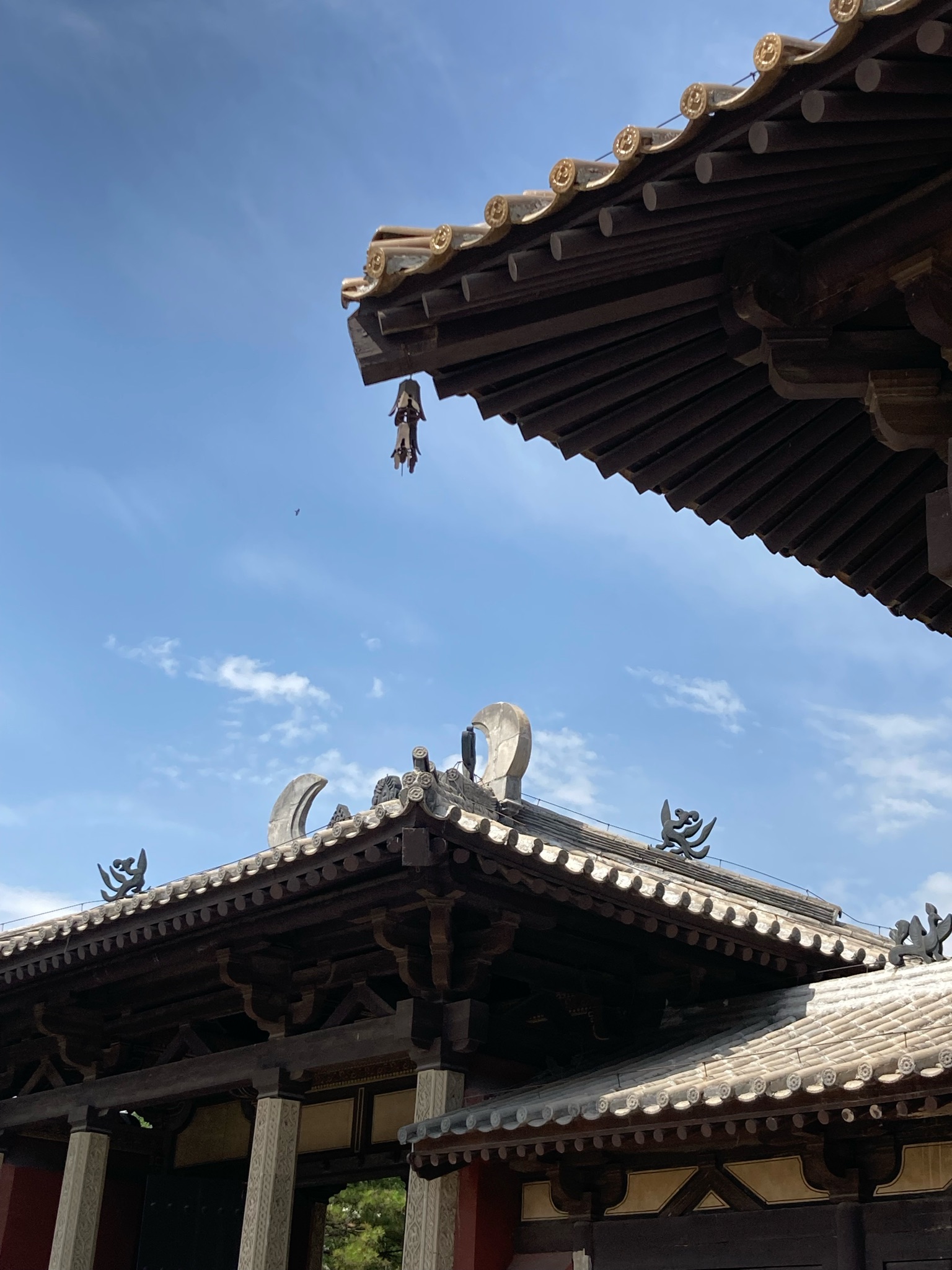
Because it is a Buddhist site, there is also a temple outside. The temple buildings are genuine wooden structures, which is quite interesting. The wind chimes hanging from the eaves have an antique charm. I had seen them before in Japan, which gave me a slight illusion and then turned into regret: this is clearly where Tang culture originated, yet it has not been preserved as well as it was passed down to Japan.
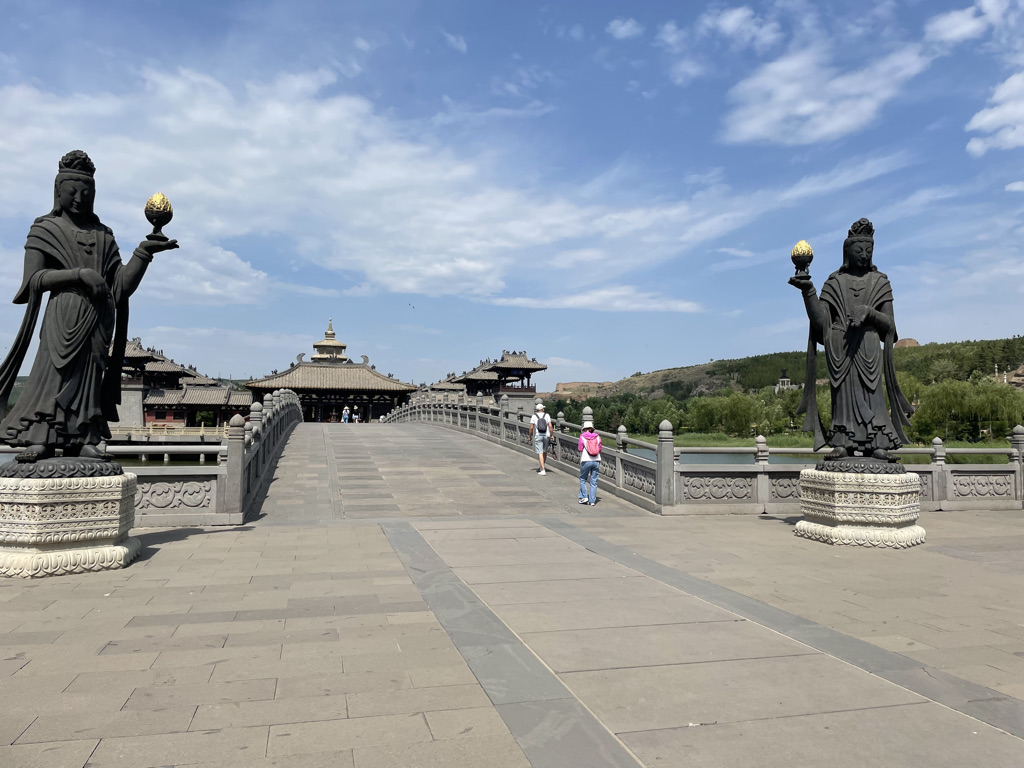
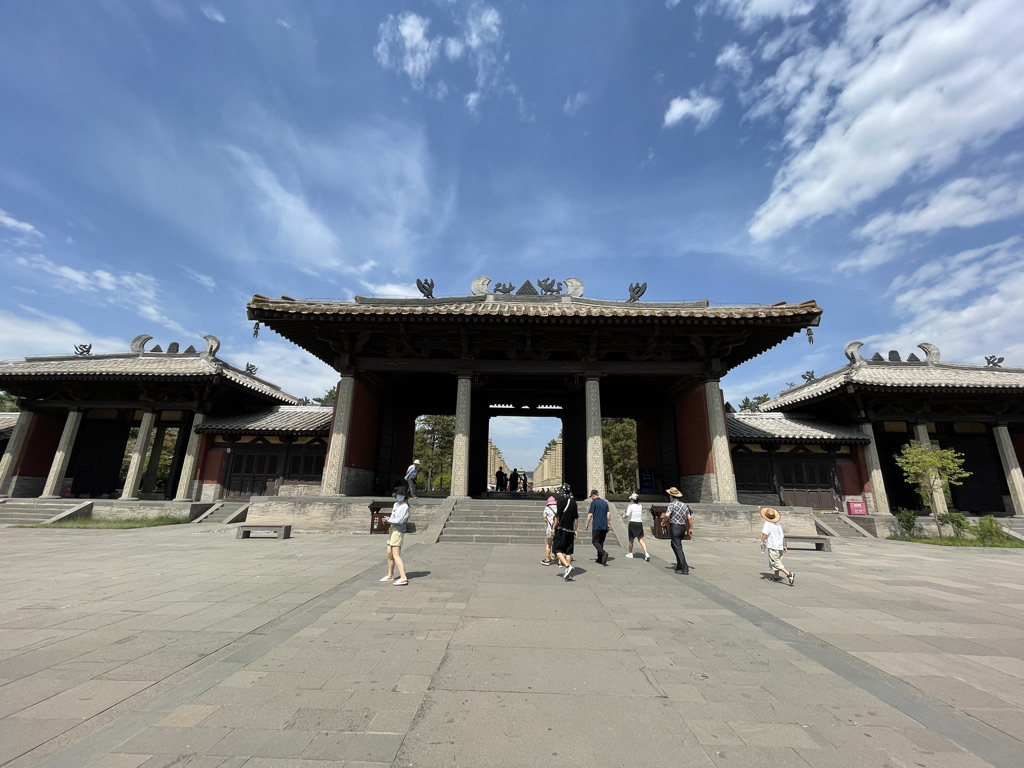
We had lunch at the entrance to the scenic area. It was way too salty—I could barely eat it—so we took a taxi back into the city. In Datong's old city, the ancient city wall has been completely rebuilt, and they also made a linear park. The single-story houses inside the inner city have also almost all been demolished. Starting from Huayan Temple and ending at Fahua Temple, we walked through the core area from west to east. Here's a map for reference:
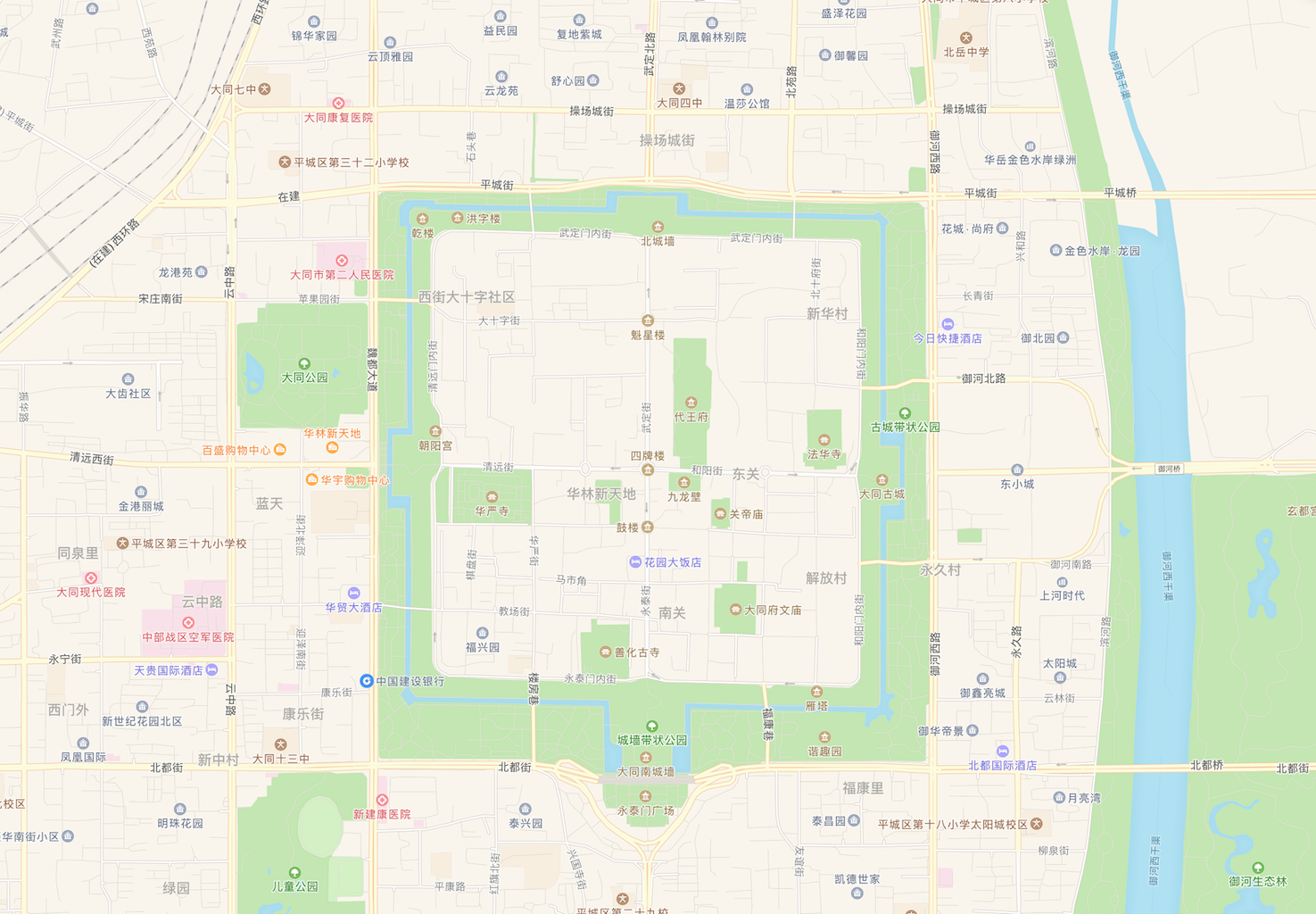
Huayan Temple requires a 50-yuan ticket. Although we didn't go in, we could already see from outside the wall that its dougong brackets were delicate and beautiful. I wanted to go in, but the boss thought it was too expensive, and neither of us is that interested in temples, so we gave up.
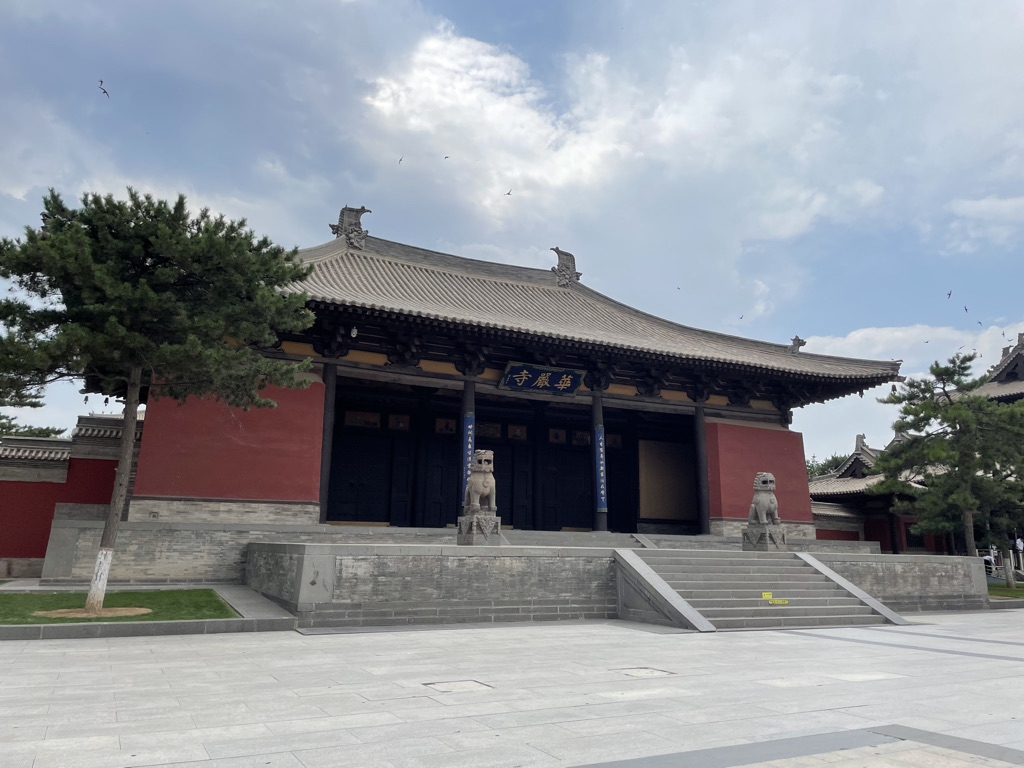
To the east of the temple is a large commercial area built in an imitation-ancient style, but it was deserted and not many shops were open.
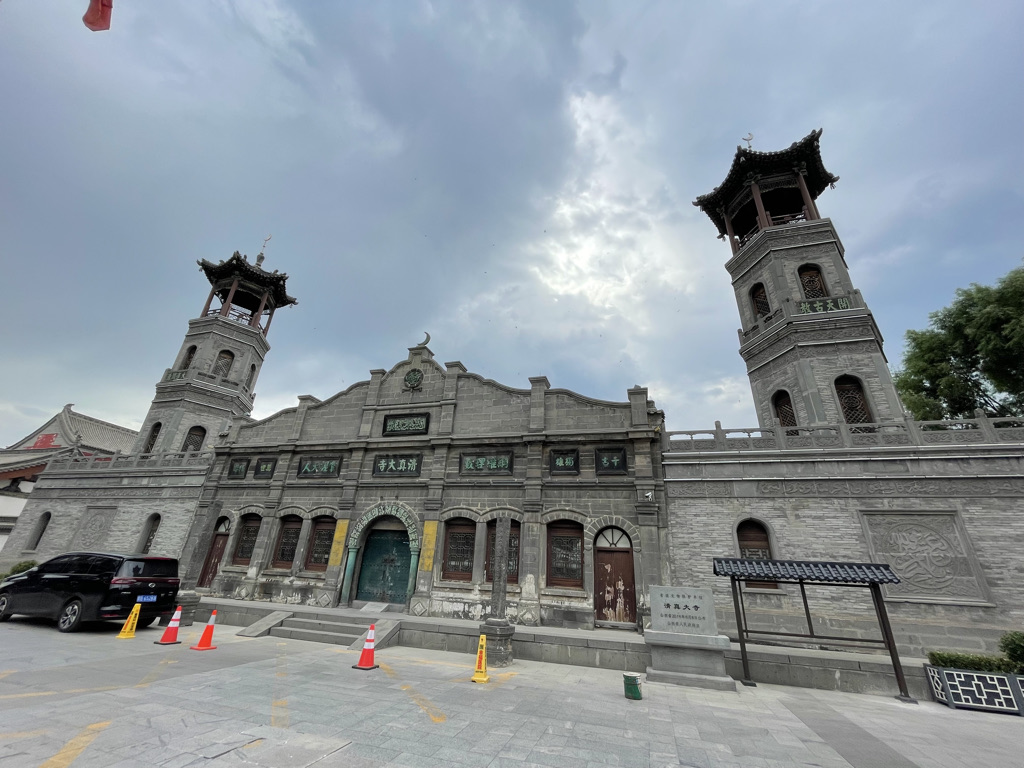
A little farther west, we came across a mosque. It was quite distinctive, a blend of Chinese and Western styles, but it didn't seem to be open, so we didn't go in either.
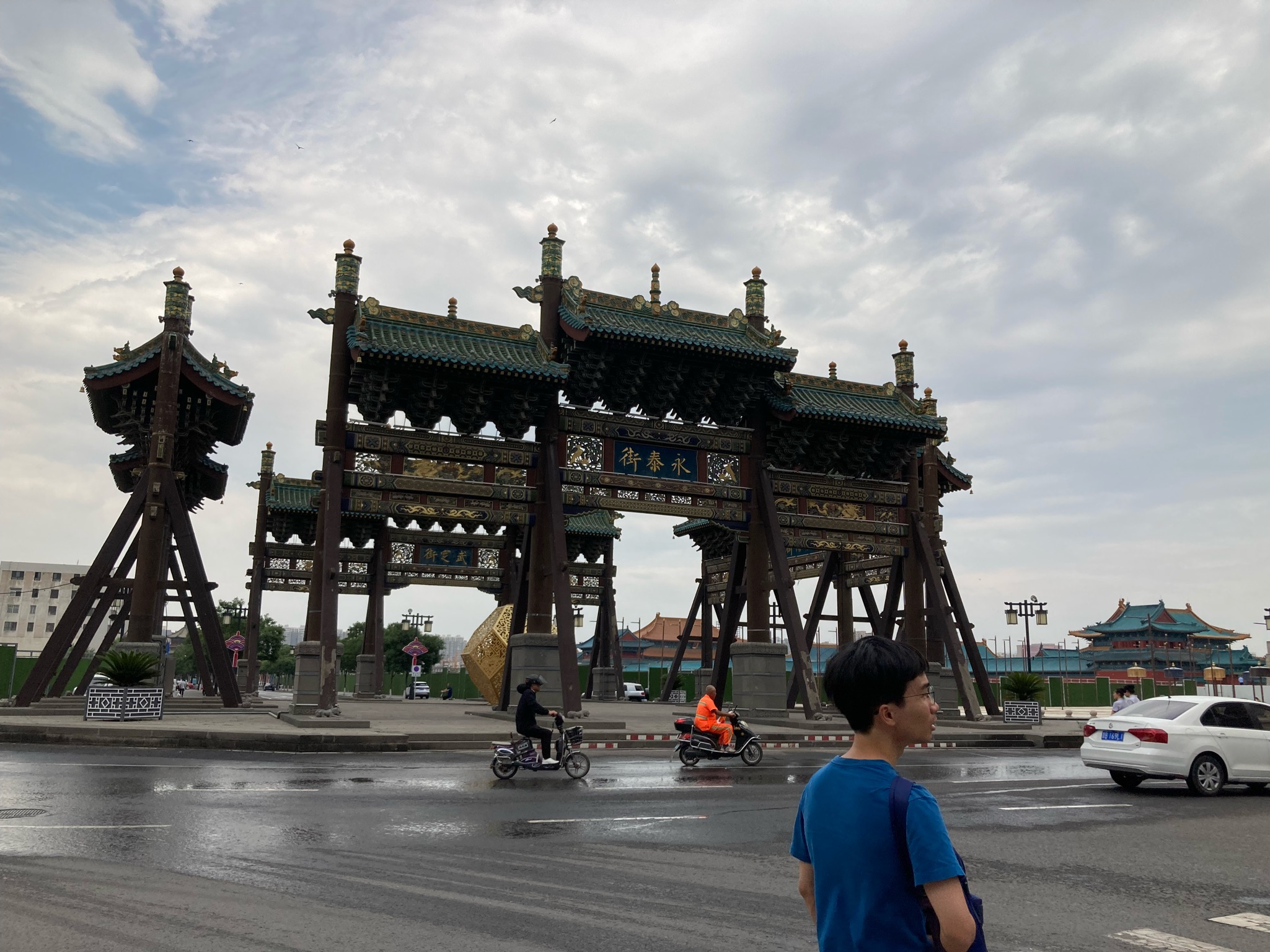
Then there was the Four Memorial Archways—pretty average.
On the way we passed what is said to be the largest Nine-Dragon Wall in the universe, even bigger than the one in Beijing.
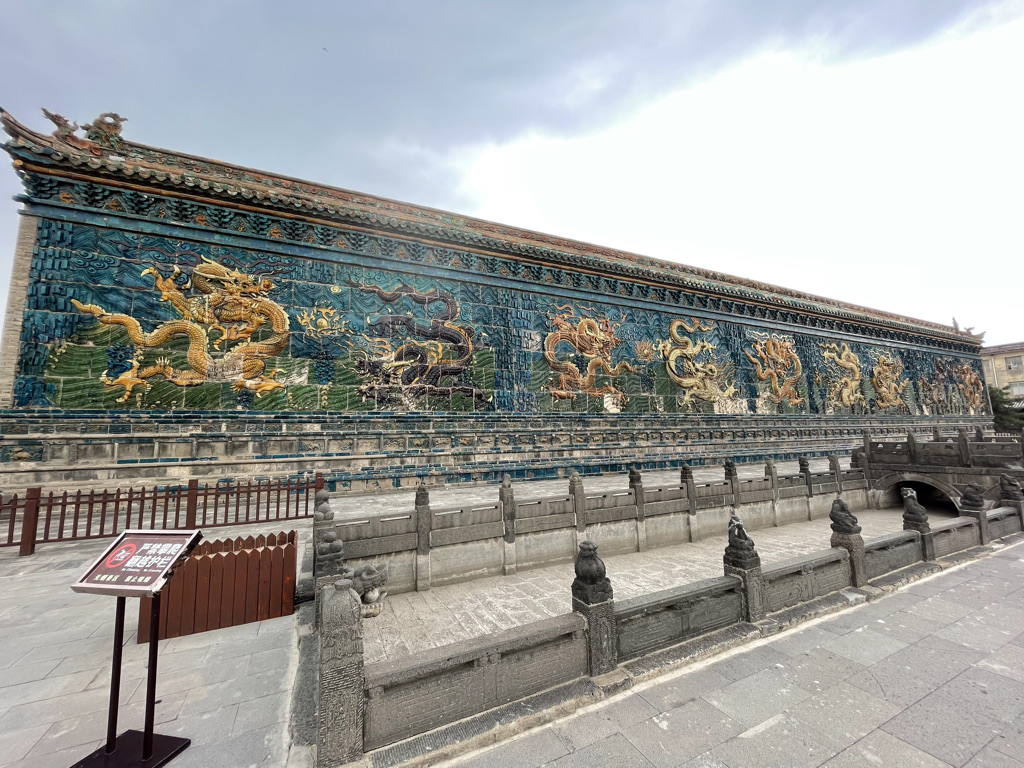
This one was moved later by the Central People's Government of New China; originally it was the facade of the Prince Dai Mansion.
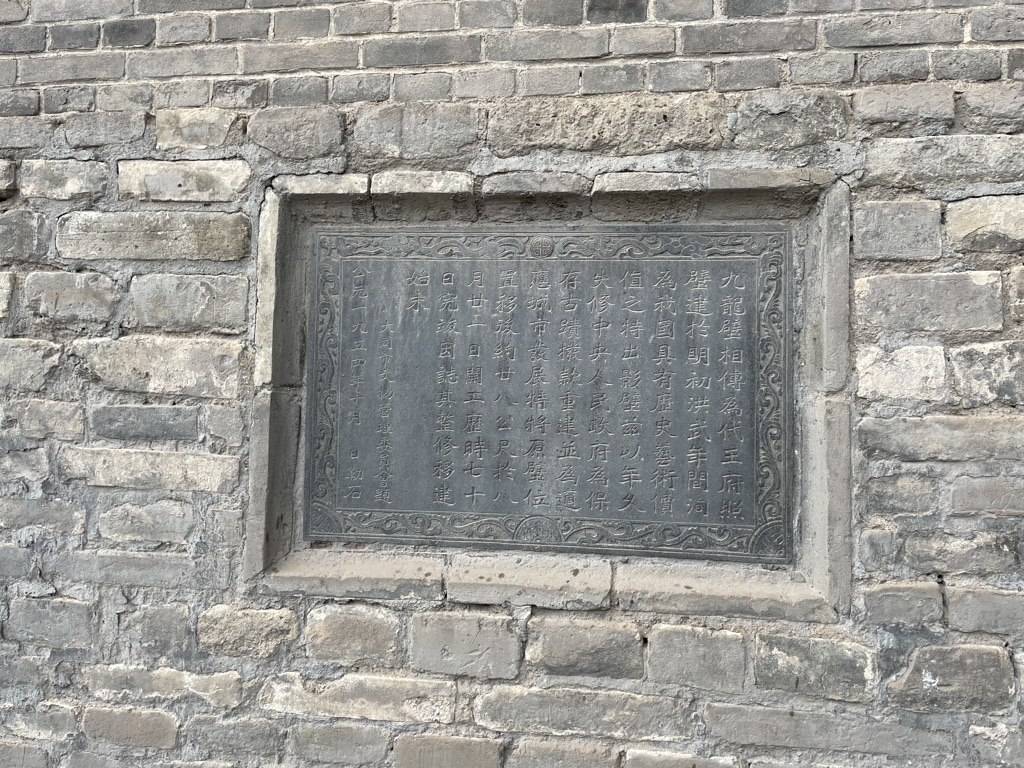
North of the Nine-Dragon Wall is the Prince Dai Mansion, and this place is interesting. It is basically a replica of the Forbidden City, except that most of the roofs have been changed to blue-green—after all, it's "Dai." This place is now free to visit, but the entrance is a bit small and easy to miss, and there is also a free guide. Most of the Prince Dai Mansion was actually newly built in modern times after demolishing old houses, but I think it was rebuilt with great sincerity, because many newly built pseudo-ancient buildings today use cement for dougong and columns, while this place uses wood. The layout was rebuilt according to the original site. The reason the "Dai" prince's mansion could be built so large is that it belonged to Zhu Yuanzhang's favorite son. It was the early Ming dynasty, and there weren't many concrete regulations yet, so they basically built it as large as they wanted.
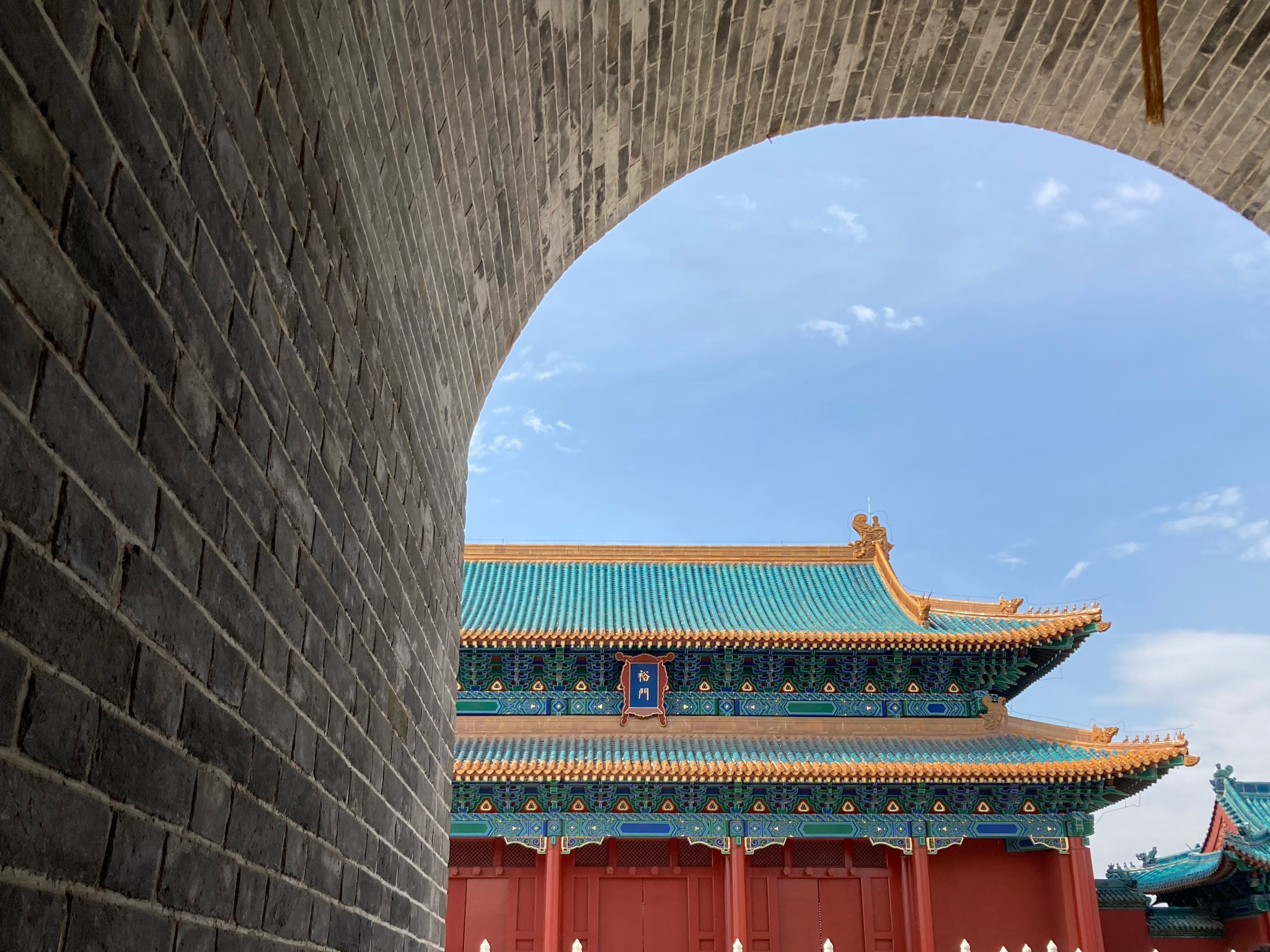
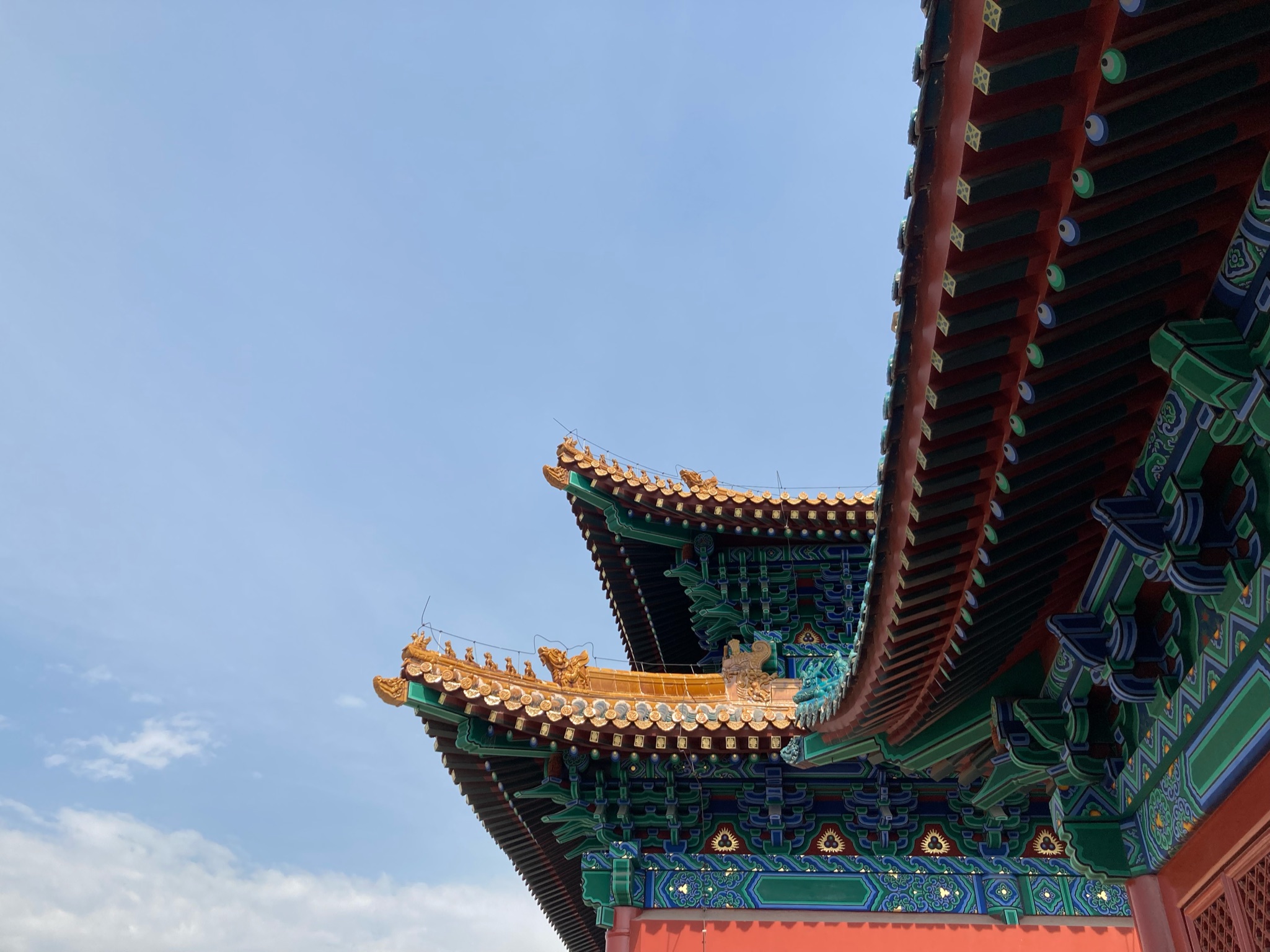
Not all the roofs are blue-green. The "Chengyun Hall" has a yellow roof. Doesn't it look like the Forbidden City?
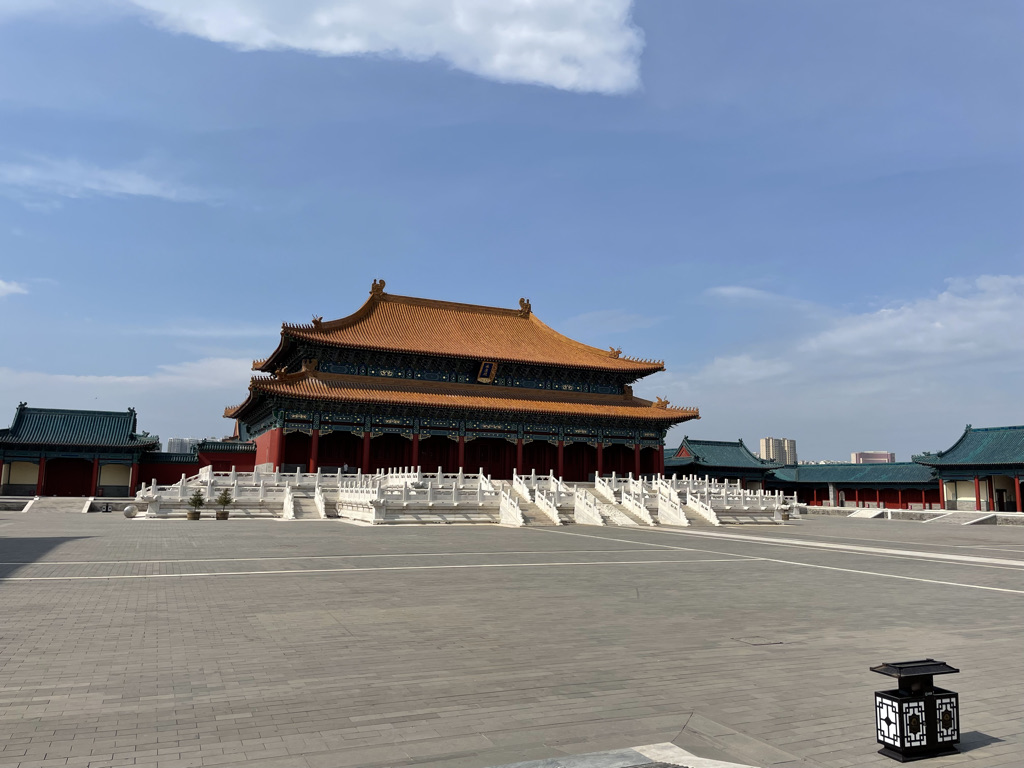
The scenic area is so niche that there were almost no people—basically a perfect place for young women to take photos.
Our last stop was Fahua Temple, a very clean and antique-looking temple.
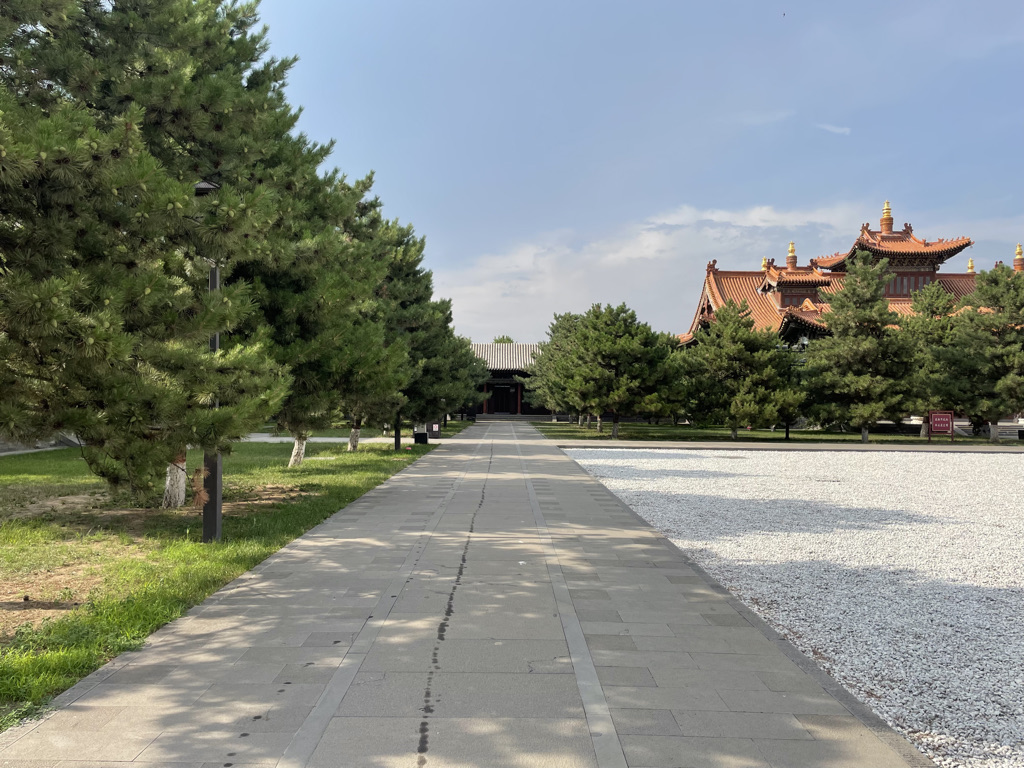
We were lucky enough to capture a Buddha halo.
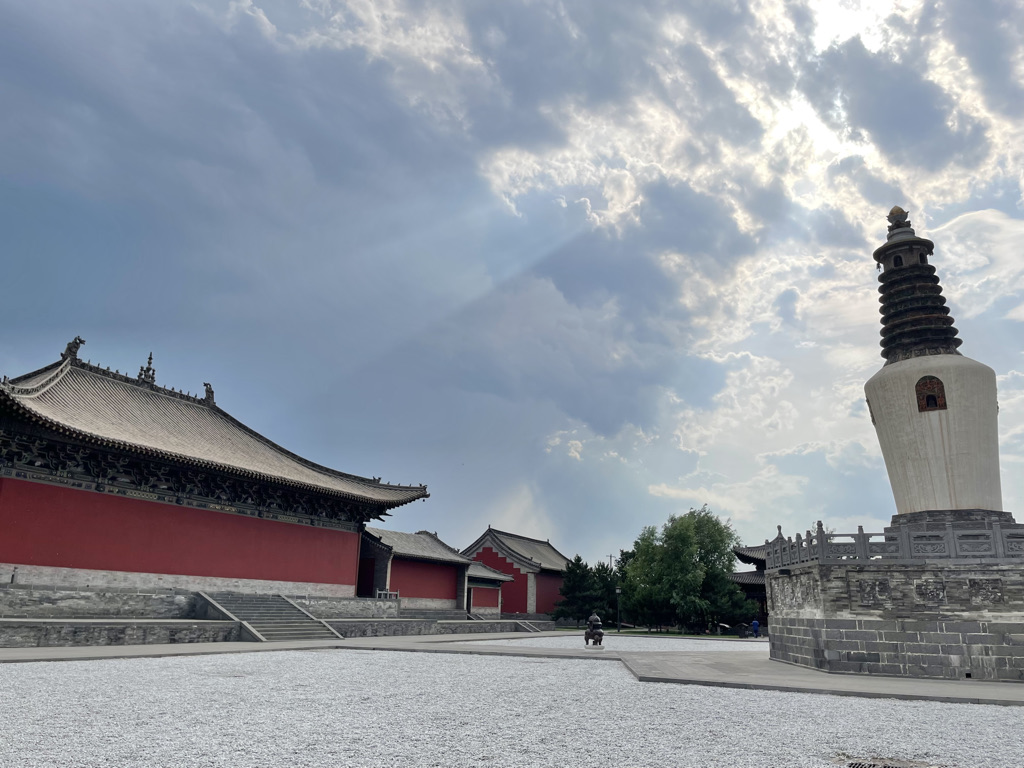
To sum up, there actually isn't much of a lived-in atmosphere in the old city now. It has basically all been demolished, and rebuilding is only partly finished, while tourists are very few. The place with the strongest sense of life turned out to be Fahua Temple, the last place we visited, because the monks were still living there. Still, when we came out and saw a rabbit meat shop at the temple gate—my god, does Buddha know about this?
Day 2
The plan for this day was the Hanging Temple and Mount Heng in the north. Hey, if I drag Miss Ren up Mount Heng, will little nun Yilin get jealous and hide from me?
The Hanging Temple is right below Mount Heng, about seventy or eighty kilometers from Datong. We had originally thought about joining a tour group, but after looking, all those one-day tours included the Yungang Grottoes, and the schedule was really rushed. Later, though, we realized that in fact it was more or less possible to do it all in one day (mist).
By the time we got up, had breakfast, and walked to the car rental place, it was already after 9 and almost 10. There was a little traffic leaving the city, and we didn't arrive in Hunyuan County for lunch until almost noon. From the county seat to the Hanging Temple is very close, and we got there in no time. Tickets for the Hanging Temple were cheap, but going up into the temple cost an extra 100, so we just looked at it from below. Actually, you can see it even from the parking lot.
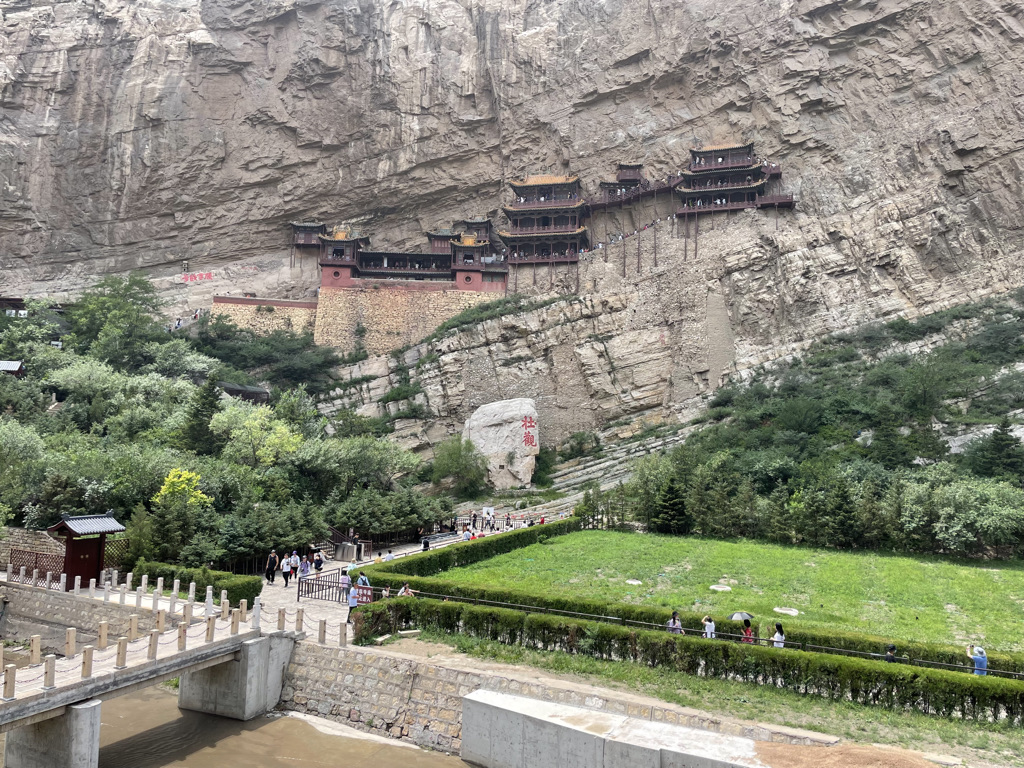
It is built tightly against the cliff, but from a distance you can actually see that it is no longer a wooden structure; it has long since been replaced by reinforced concrete. The inscription "Magnificent" was written by Li Bai. From another angle, you can see how truly precarious it is:
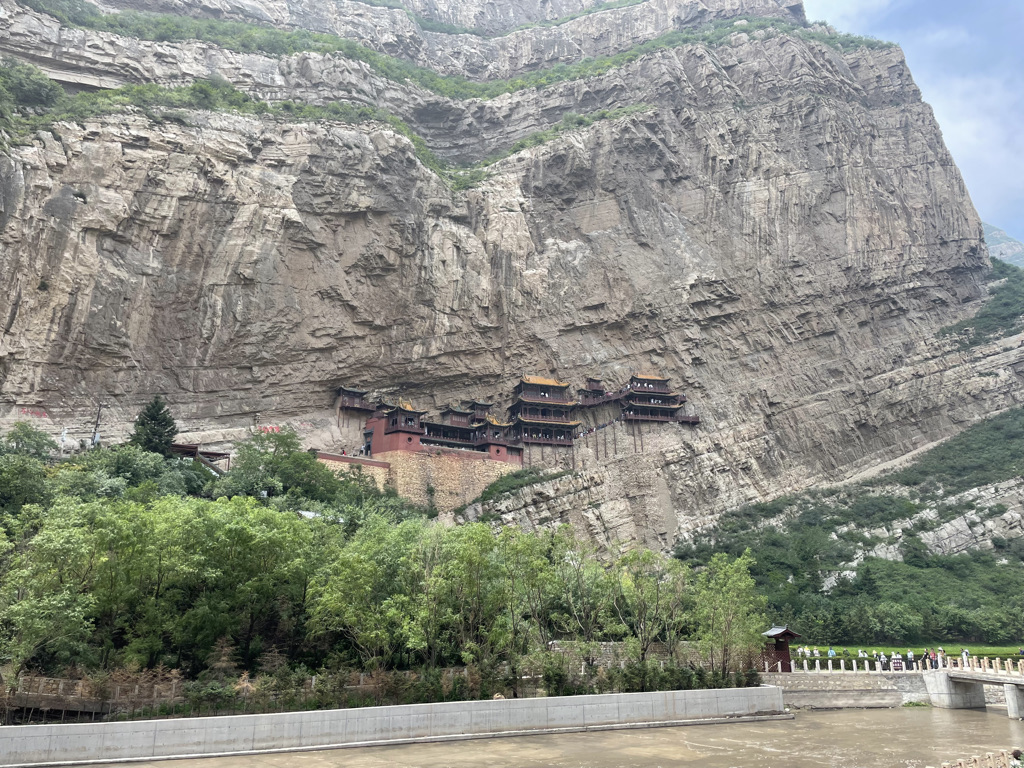
There is a river in front of the Hanging Temple. The water is not abundant now, and there is a hydropower station dammed upstream.
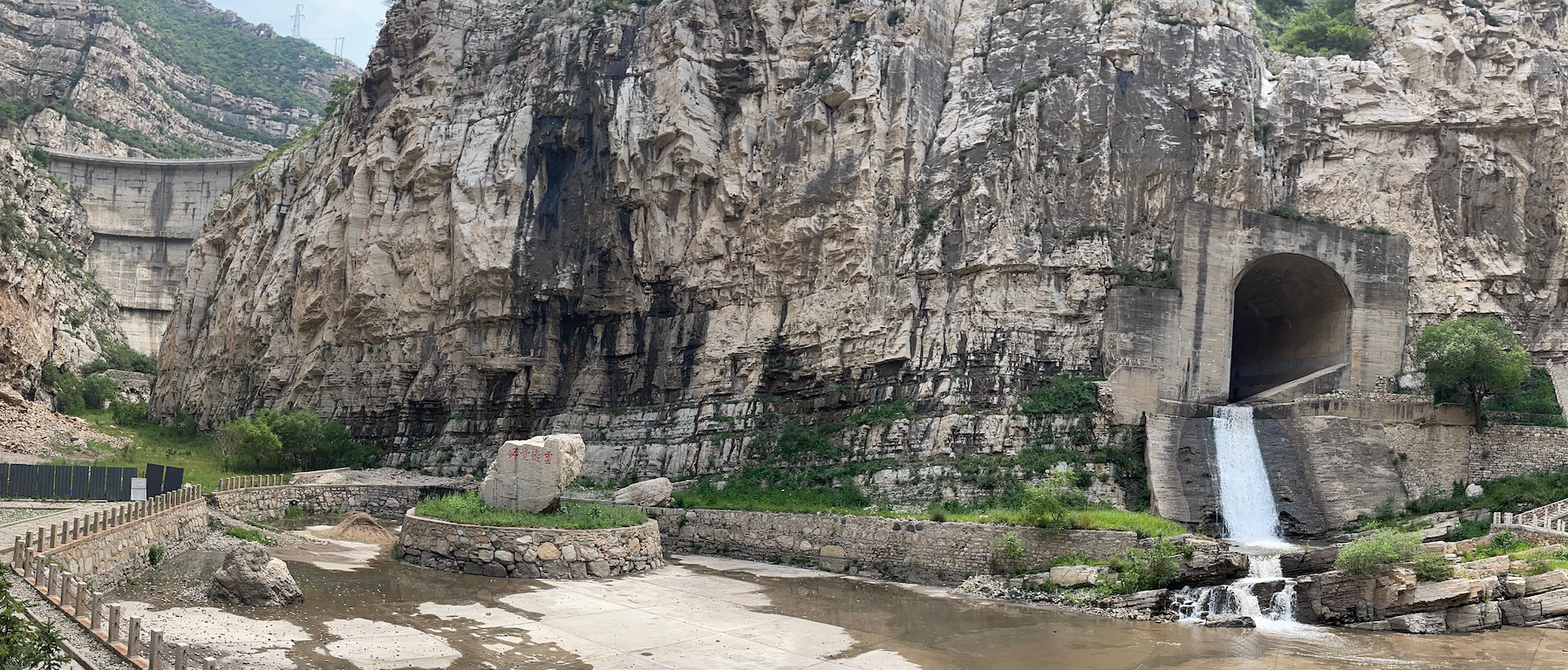
The 10-yuan parking fee told me I had only spent 40 minutes at the Hanging Temple. No wonder some people parked directly in the open space before the fee gate. We came back the same way, got onto the national highway, drove through the Hengshan Tunnel, and then went up Mount Heng. That national highway has been pretty badly worn down by heavy trucks, and Hengshan Scenic Area is right by the road, with a rather small parking lot too. Mount Heng is the only AAAA scenic area among the Five Great Mountains; the other four are all AAAAA. After going up and coming down, it did feel like that AAAA rating was a bit shaky.
At the foot of the mountain is the Hengshan Sect martial arts ground (though actually this is a Taoist temple, and Hengshan doesn't have a nunnery):
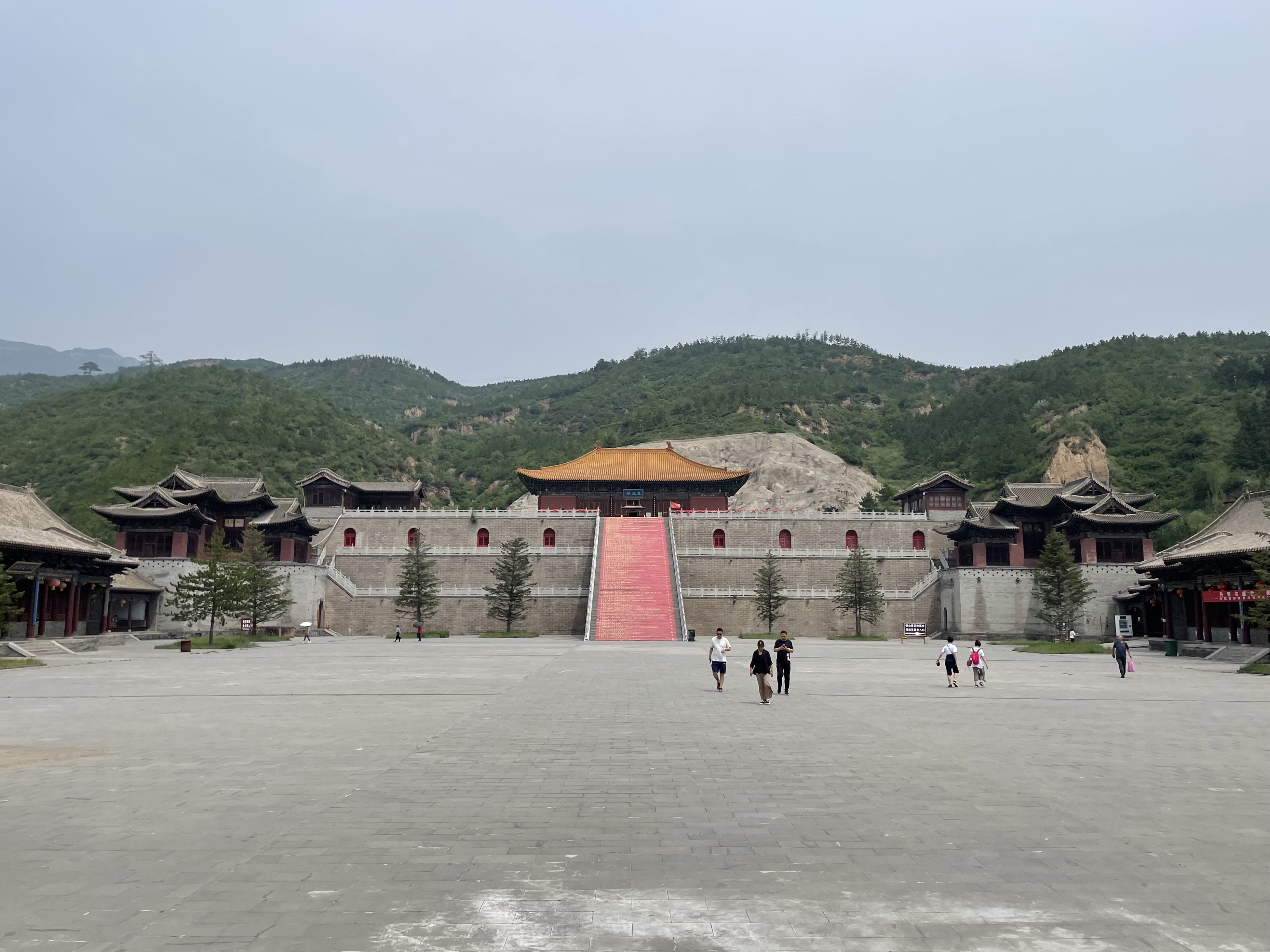
You can climb directly, of course, though the mountain is still fairly tall. You can also choose to take a cable car or a shuttle bus. The cable car goes to a point a bit over halfway up, and the bus to around halfway. In the photo below, there's still one-third of the climb left to the summit. The place indicated by the leaves on the treetop at the right is the entrance to the scenic area (the triangular open space to the left of the reservoir). The open area visible in the middle is where the uphill shuttle bus drops passengers off. This time, because Shanxi has had a lot of rain recently, the very top of the mountain was closed. It didn't feel as demanding as Xiangshan, and the whole hike including the descent took just over two hours.
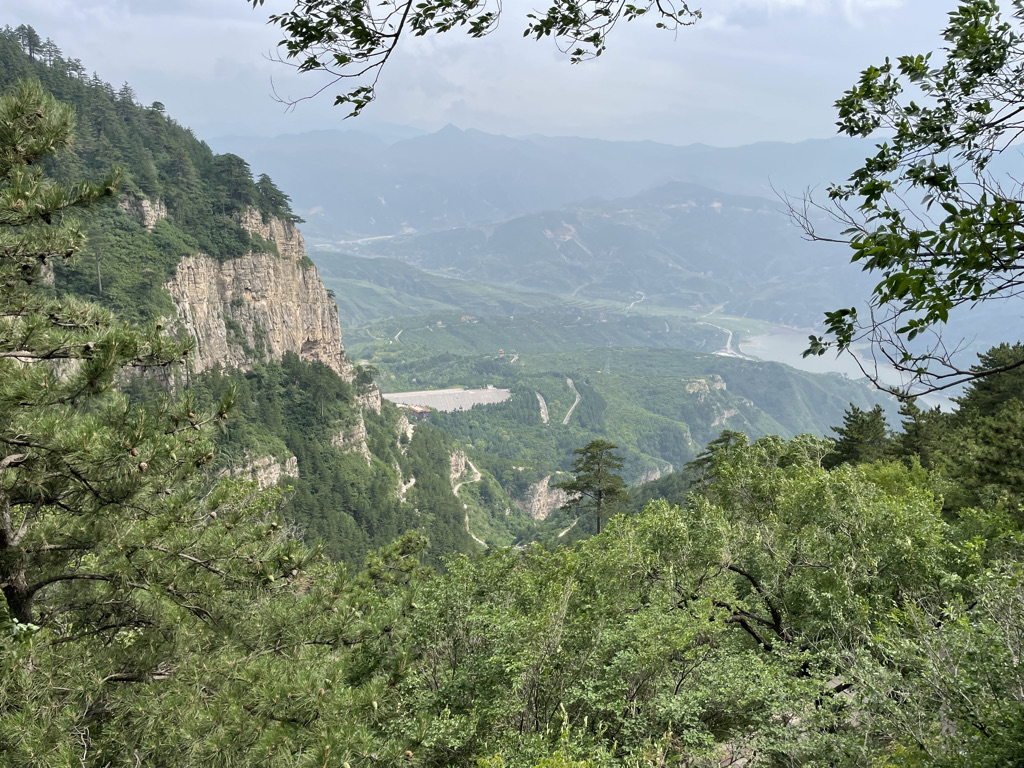
The tool person is climbing the mountain.
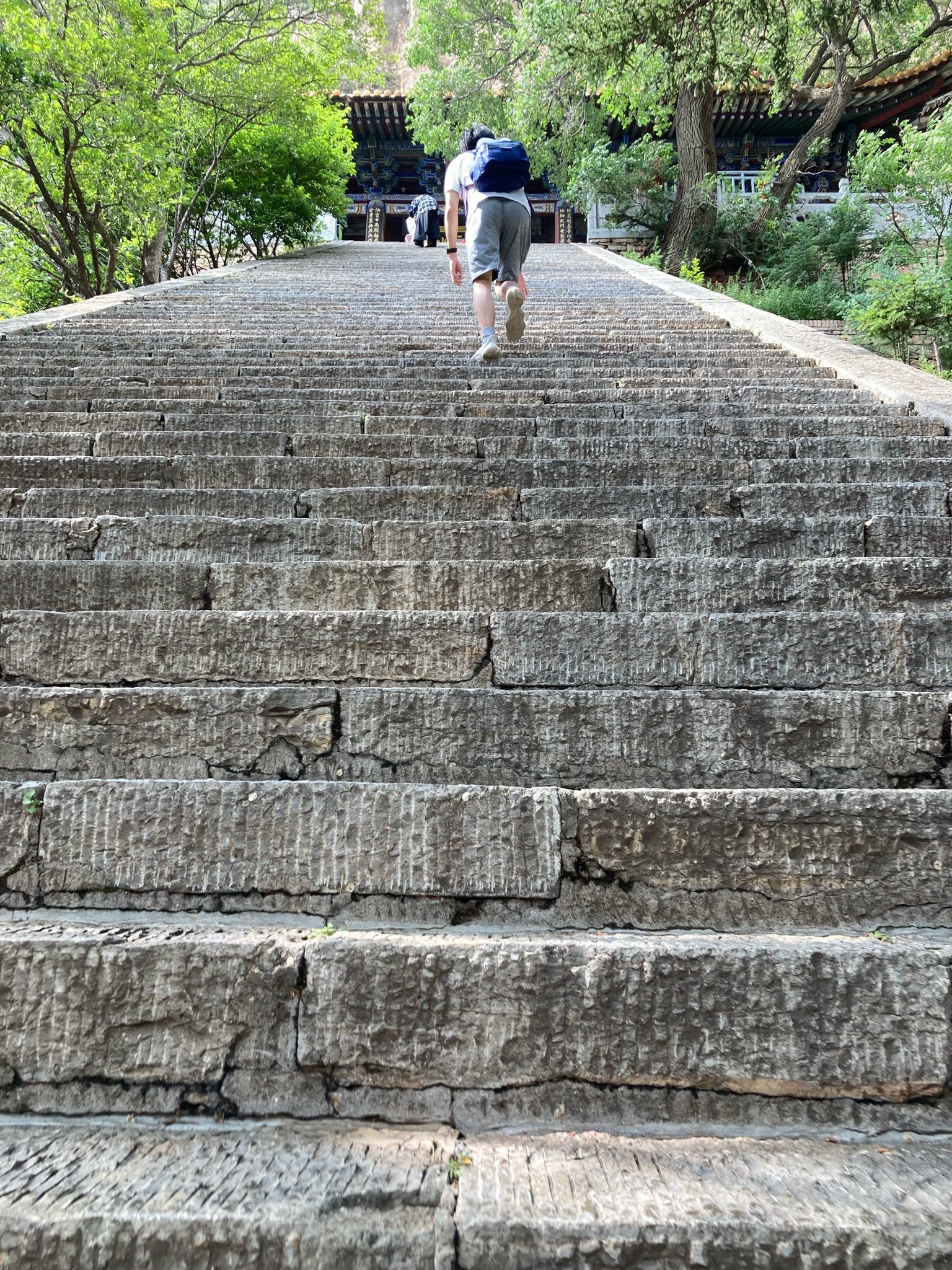
Imperial calligraphy by Emperor Kangxi.
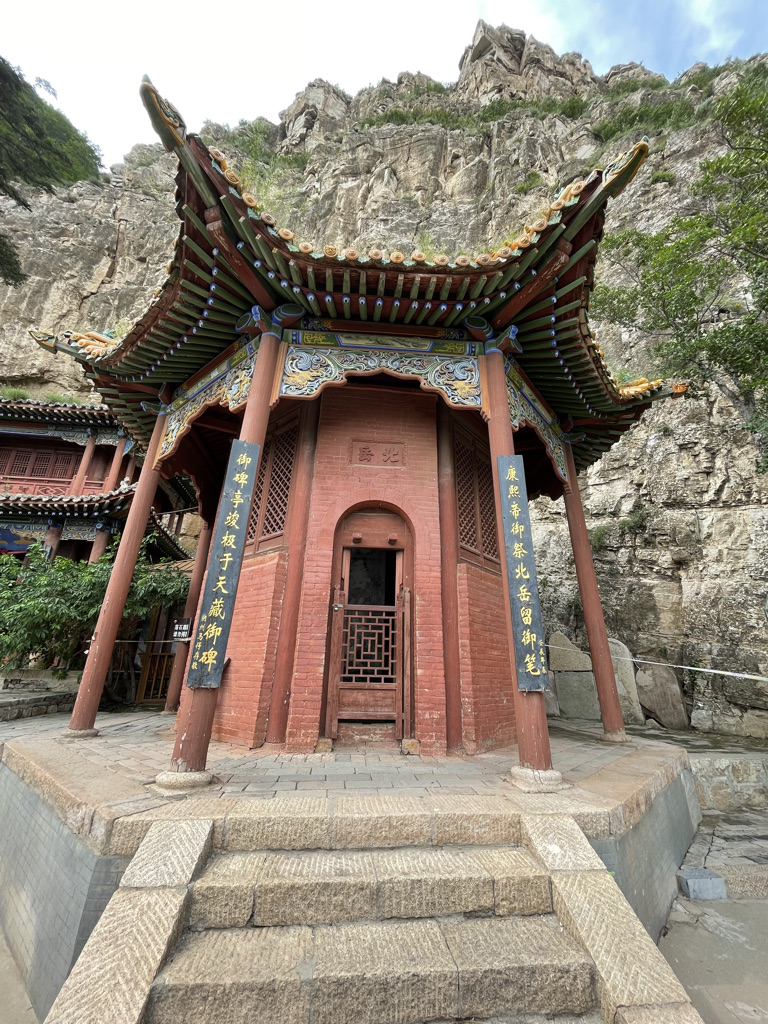
Anyway, if you don't have high expectations, it's still okay.
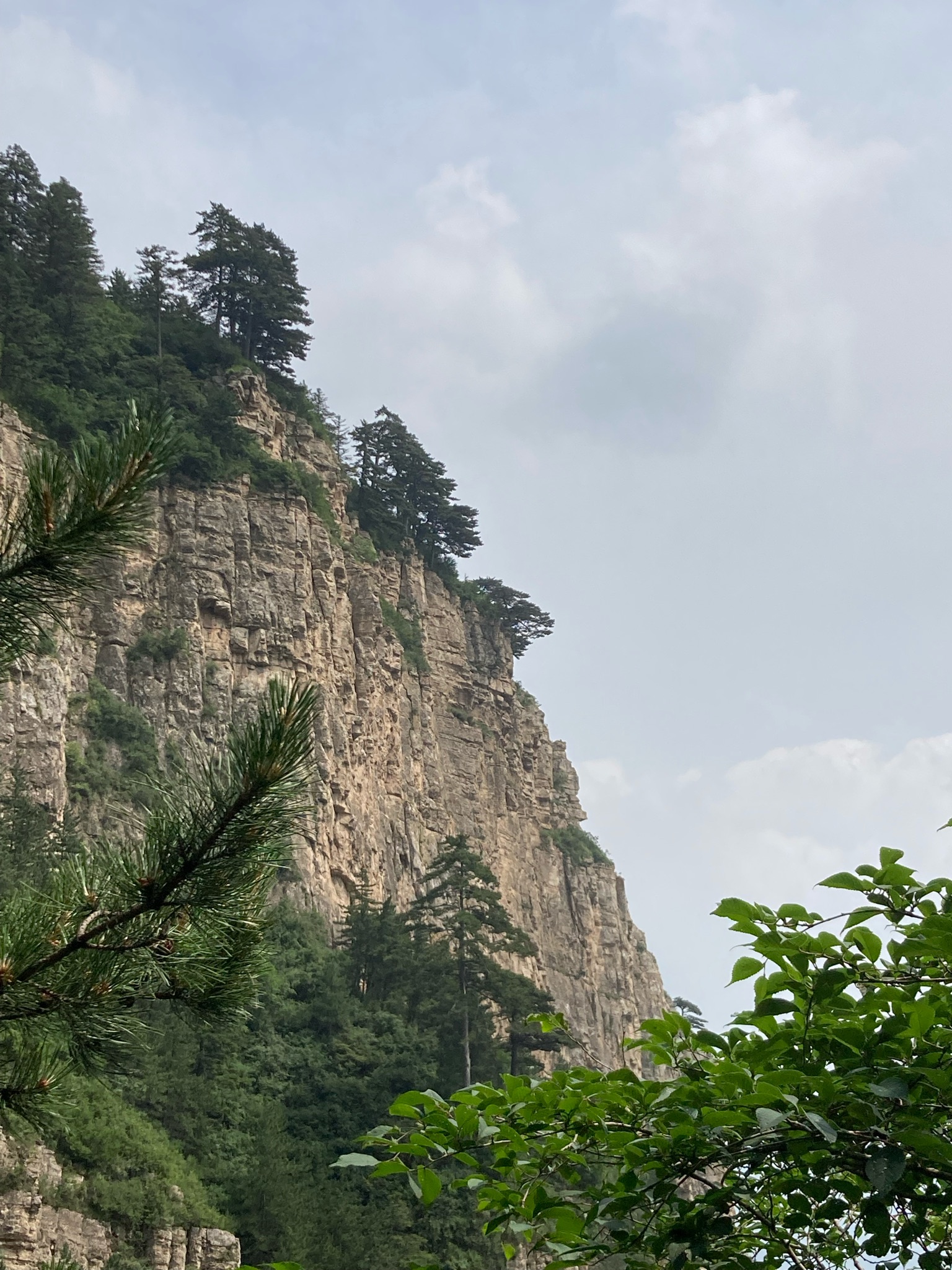
Other things
Since we were in Shanxi, of course we still saw coal mines—including near the Yungang Grottoes, where you can also see coal mines and coal trains. This is the starting point of the famous "Daqin Railway," the heavy-haul coal railway from Datong to Qinhuangdao, which transports nearly 20% of China's coal and contributes nearly 10% of the country's electricity generation. It is also a listed stock. There is a rumor that trains from Datong to Qinhuangdao hardly consume electricity at all, and that electricity generated by locomotive braking can even make power consumption negative.
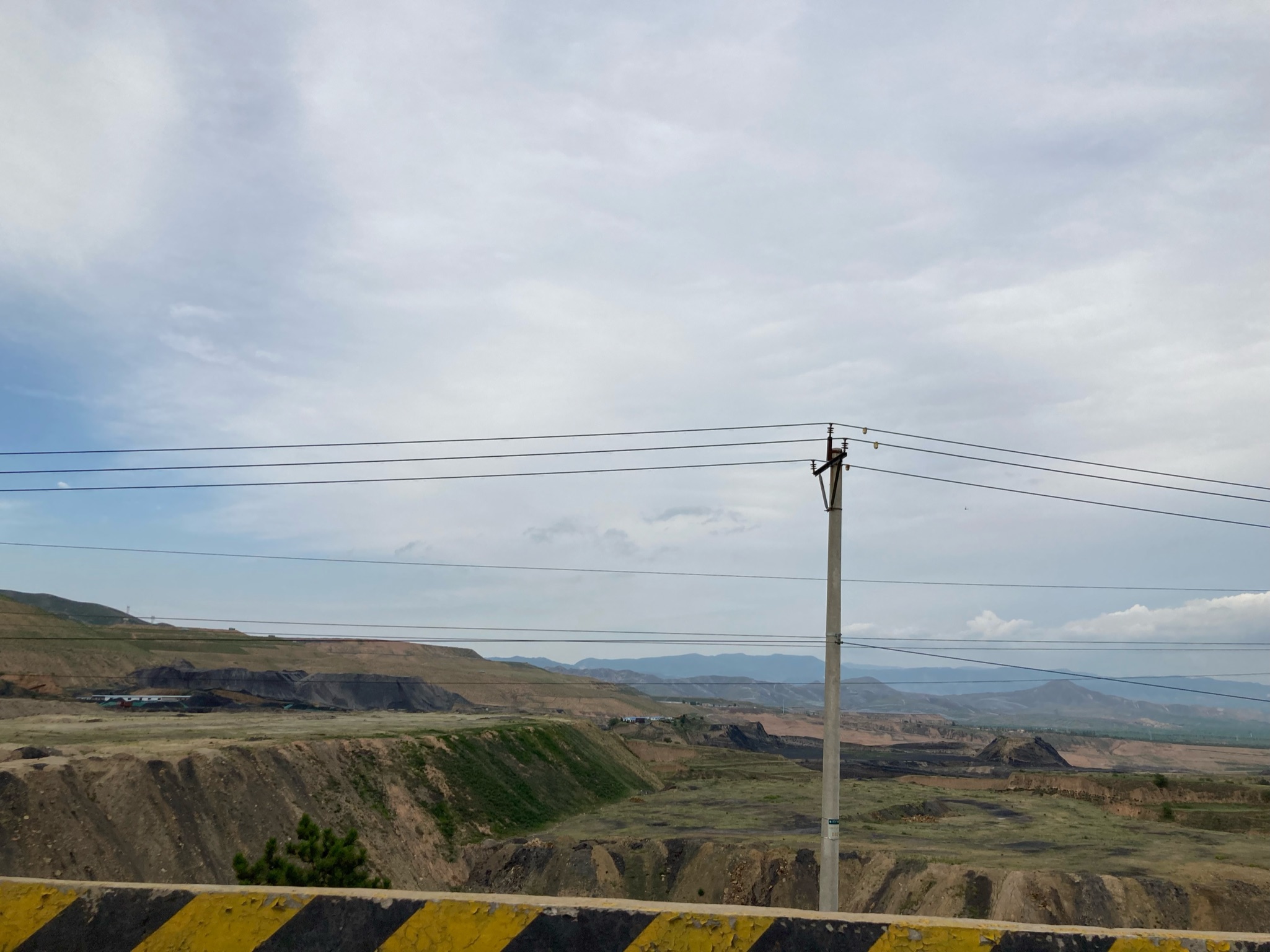
The Loess Plateau really is full of ravines and gullies. Every now and then there's a huge deep pit, and vegetation is not abundant, so soil erosion is indeed real.
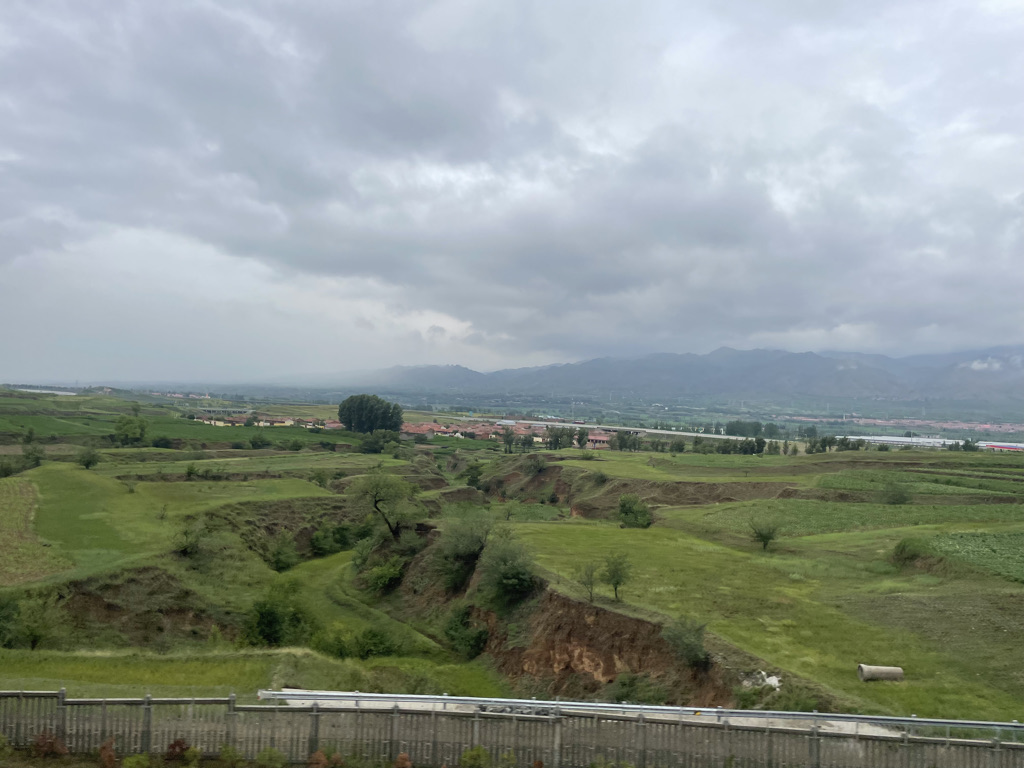
Datong's consumption level is very low. It feels like local incomes aren't high either, but you can clearly sense that the local government has far more money, demolishing and rebuilding ancient architecture everywhere. Thinking about it, that makes sense: this is a resource-based city. Aside from a few coal bosses, many of the mines belong to the government, so ordinary people indeed don't have many special opportunities. The government's demolition and rebuilding is understandable too. After all, resources will be depleted one day, so while there is money now, investing early in some tertiary industries is also a path toward sustainable development.
And for friends in Beijing, now that the Beijing-Zhangjiakou high-speed rail is open, Datong really can be a weekend travel destination. It isn't exceptionally outstanding, but if your expectations aren't too high, the experience is still okay. Given Datong's current prices, I even feel like the trip delivered some solid value for money.